
…at the Bearsville/WB offices, as we took photos that would eventually be used for the postcard that was inserted in Todd’s ‘A Wizard, A True Star’ album.”
As an impressionable 8-year-old boy, Marc Nathan saw The Beatles for the first time on the Ed Sullivan Show. It was a moment Marc described as having “radically changed America, but also radically changed the world.” The impact, he said, was all-consuming — “everything was The Beatles.”
In 1964, Marc was living with his family in Forest Hills, Queens on the 19th floor of a high-rise apartment building, when The Beatles played nearby at Forest Hills Tennis Stadium. He opened the window, and while he couldn’t hear The Beatles, he heard the loud screaming of thousands of young girls for about an hour and a half. It was then, he said, that he “became very aware of Top 40 radio and Top 40 music” and started radio DJ’ing in his bedroom, spinning 45 rpm records and talking them up –“Here’s the Intruders! Cowboys to Girls on WMDN!” which stood for Marc David Nathan. That was how it all started for this young kid from New York City.
Marc’s interest in music continued to grow, and at the age of 15, a chance encounter with the music of a favorite artist would literally change his life, paving the way to an illustrious career as a reputable and successful A&R person working with numerous labels – VP, A&R Research – Universal Records, Senior Director, A&R Research – Capitol Music Group , VP, A&R Research – MCA Records, Senior Director, Pop Promotion/A&R – Atlantic Recording, to name only a few. Additionally, Marc is credited with having identified and aided in the acquisition of the Cash Money record label at Universal Music Group, as well as identifying and recommending the immediate signing of 3 Doors Down, and others. While in between gigs in 1991, he brought Barenaked Ladies to Seymour Stein at Sire. He has managed The Explorers Club, and has executive produced albums by them — Kon Kan, and King Missile. Label promotion jobs include: Bearsville (Todd Rundgren, Foghat), Casablanca (Kiss, Donna Summer), Mushroom (Heart), Sire (Talking Heads, Ramones), RCA (Rick Springfield, David Bowie), IRS (The Go-Go’s), Modern (Stevie Nicks, Natalie Cole), Atco/Atlantic (INXS, Robert Plant, Winger) and many more! A&R positions yielded top 10 hits in multiple formats: Kon Kan (dance, pop), Linear (pop), King Missile (alternative), Terry Tate (R&B), Merril Bainbridge (pop), The Hunger (rock), and 3 Doors Down. His list of credits and experience is so vast, I could not possibly do him justice in one article, but I hope to give you at least a glimpse of his journey in the music industry of 49 years and counting.
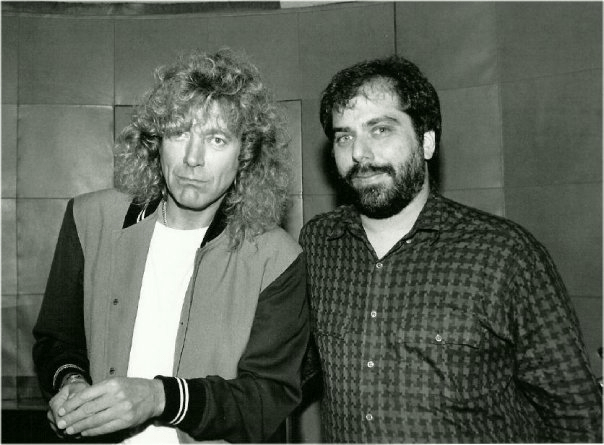
Earlier this year on 6/28, Marc nearly lost his life, when he actually flatlined following a serious health condition. Thankfully, he survived it, and continues to work as a consultant in the music industry. I am grateful for my recent opportunity to meet and talk with him about his career, the artists and bands he worked with, his views on today’s industry, and the evolution of the A&R role.
While much has changed from 40-50 years ago, music is alive and well and is being consumed by the masses. That said, contemporary artists need to consider the dynamics of today’s market that have significantly changed to be successful, the definition of which has also changed. I hope you will not only find this interview with Marc interesting, but also, insightful and inspirational to continue making music.
* * *
LTHN: Tell me the story behind how you ended up working in the music industry at such a young age.
NATHAN: I used to get my allowance and go down to Alexander’s Department Store to buy an album every week. I bought an album called NAZZ… all songs written by T. Rundgren, produced by T. Rundgren and arranged by T. Rundgren, and I’m like, whoever this Todd Rundgren guy is, I’m digging it! He was a real favorite of mine.
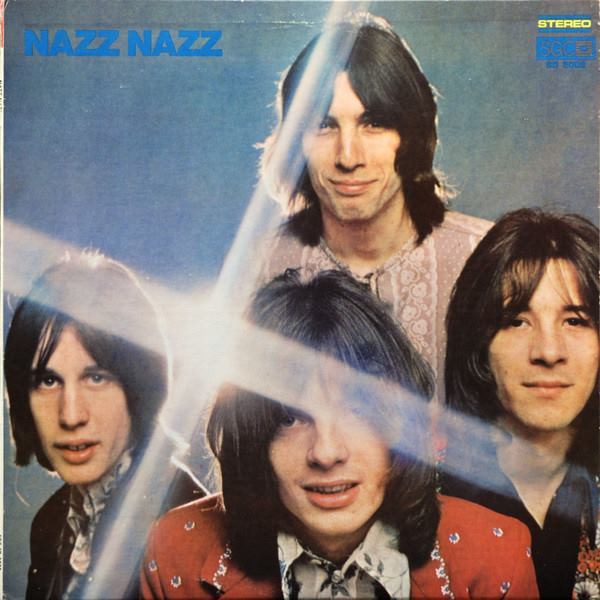
NAZZ broke up in 1969, and Todd recorded a solo record that came out in 1970, called “Runt.” It had a hit single, called “We got to get you a woman” …and because I was such a Rundgren fan, as soon as it was available in the store, I bought it.
The label copy said there were six (6) songs on the “A” side and four (4) songs on the “B” side, but my album copy had seven (7) songs on the “A” side and five (5) songs on the “B” side, so I wrote a fan letter to Todd, ”Dear Todd, I bought your new album, but there were these two songs and I don’t know what they are.” I mailed it to Todd Rundgren c/o Ampex Records.
In 1971 I am in High School, 16 years old, and I come home and my mother says to me, “You’ve got a package.” It was the “Runt” album and a handwritten note that said, “Dear Marc, the copy that you are speaking about is a master that got rejected. Only 500 of them were pressed, so put it away and keep it as a collector’s item. Here’s the album the way it was intended. Keep spreading the good word about Todd. Yours truly, Paul E. Fishkin, Eastern Regional Promotion Representative, Ampex Records.”
How cool is this! It came out of the blue, like 2 months later…and Paul Fishkin is to this day one of my, if not very best of friends. He just so happened to open a stack of Todd’s fan mail that day. If he hadn’t opened that stack of mail that day, you know, we wouldn’t be sitting here. My life would have been altered forever.
[Marc went over to Ampex Records to thank Fishkin and ended up asking if he could help out at the label. Just 3 days later, he was working in the radio promotion department at Ampex. Marc would continue to work in radio promotion until around 1988, when Atlantic Records gave him his first job as an A&R.]
LTHN: In an interview with PlaylistResearch.com, you said that “bands need to manage their expectations better, but rock is not ‘dead’ per se.” Can you explain what you meant by that?
NATHAN: Well look, I think when I did that interview there were still record stores and radio stations…that was four years ago… a lot has changed in four years. The fact is, managing expectations means keeping aware of what the end goal is and not biting off more than you can chew, and first and foremost, not being delusional about your career. Everyone wants to be a star, but it is very rare that it happens. It’s a real needle-in-a-haystack thing to have a career in music.
LTHN: If you were looking at a rock band today, how has what you look for changed from, say 30 years ago?
MARC: I mean look, I signed 3 Doors Down…I discovered them some 20 years ago around 1998. That was a time when a band could record a record locally, take it up to the radio station, get played on a specialty show on a Saturday or Sunday night and the request lines blew up. Satellite radio wasn’t important 20 years ago. In the mid-90s, a company named Alesis made a machine called the ADAT, and all of a sudden, you didn’t need to go into a recording studio and spend tens of thousands of dollars making a record.
Lisa Loeb had a song, called “Stay” back in 1994 – she recorded it in her bedroom and it became a number one multi-platinum record that launched her career. She made her hit song in her bedroom…so consequently, a lot of bands started making records themselves without the benefit of guidance from an A&R person or financial backing of a management company, and a lot of it was crap.
Everybody loved when American Idol came on the air — a lot of it was terrible, and a lot of it was a setup, but it changed the way people perceived A&R, in a sense. It wouldn’t be fair of me to discount the entire thing as a sham, but NBC, Fox and now ABC, knows good television when they see it.
LTHN: You mentioned that artists need to be more engaging with their audience and play a lot of gigs – that it’s the key to developing a fan base. Is that based on your experience from the past, or is that just how you see it now?
NATHAN: There are certain things that will always be a constant. If it’s a hit, it’s lightning in a bottle, and you just try to maximize and get the most out of it, but if it’s not a hit, there’s nothing you can do to make it a hit…putting it on sale, making them the opening act in front of a big act, taking out a full-page ad, taking out a billboard on sunset strip, whatever it is. If the people don’t like it or they don’t connect, you can’t force them to like it. It won’t happen…it just won’t, so when I talk about creating the fan base, it will always be that way. A band these days can make a nice living if they are willing to economize, scale it down without worrying so much about radio, not worrying so much about the marketing dollar, and goes and plays before a group of people, then comes back to the market and plays in front of those people times their friends, and then comes back a third time and plays in front of those people times their friends. There have been great examples of it over the years.
Barenaked Ladies, an act that I had some visceral involvement with in terms of signing — I brought them to Seymour Stein…they were very popular in Canada. They would come down and play the border towns – Buffalo, Seattle, Minneapolis. They would come down, and word would spread. Word from Toronto leaked down to Buffalo, word from Vancouver leaked down to Seattle, word from Winnipeg leaked down to Minnesota, and when the eyeballs hit the band on the stage, if they came back soon enough, that kid who was in the audience is telling his best friend, “you’ve got to come see this band.” Then, they would come back two months later and all of a sudden, they were able to play 2,000 and 3,000 seat rooms without the benefit of having a radio record in America. What happened then was the Warner/Reprise promotion staff took a radio person to a Barenaked Ladies show, and the programmer saw their target demo singing along to all the songs and buying all the merch, and they soon realized, “I’m probably missing the boat here.”
Today, with Spotify, Sound Cloud, Rhapsody and YouTube, people are absolutely absorbing much more music, but there are different methods now. You go through a different set of processes to expose the music, but the fact is, if you expose it and people hear it and don’t like it, try something different. Don’t keep going back to the well thinking you’re going to convert people. It’s not there, it’s not magical.
LTHN: How supportive do you think major labels and Nashville are with respect to the Rock genre?
NATHAN: In general, the major labels all feel Rock is dead. The numbers indicate that Rock music is a tougher sell. Jason Flom at Lava Records got lucky that Greta Van Fleet sold some records. Most people hate Greta Van Fleet for being a 2-bit Led Zeppelin rip-off, but yet, they sold a lot of records for a rock band in the 21st century.
It’s really about great songs. Led Zeppelin had great songs. Greta Van Fleet — I don’t know if I would say that any of their songs are “great,” but on the radio within the context of other things on the radio, it popped out and sold what it sold.
There was a time when Rock records sold millions of copies. Now, if you sell 150,000 copies, it’s revelatory how successful it is. In the old days, you’d sign a band to a $2 million deal – 3 Doors Down sold 5 million records, and everybody was happy. Now, you’d better make a record for $10,000, because chances are you are going to lose money.
LTHN: That was something else I wanted to ask you about that I read you had said – that there are no “big deals” anymore.
NATHAN: I’m not privy to the business affairs departments at major labels, and I hear there are “big deals,” but only for things that already have millions and millions of Spotify streams, etc. Things a label knows will be an easy recoupment over the coming years. It’s no longer about selling the record anymore. The record is a selling device to get you to go see the show and buy a T-shirt. I’ll sell a $35 T-shirt over a $10 CD. The dynamics have changed, and I have friends — they’re not getting rich, but they’re making a living and they’re happy. They are exposing their art, and they are catering to their fan base.
LTHN: What about your role as an A&R? How is that role different now?
NATHAN: A&R stands for “Artist & Repertoire.” In the old days, pre-Beatles, artists didn’t write songs. They sung what the A&R man brought them. The role of the A&R person was to find a great artist and great songs. Then, when Bob Dylan, The Beatles and all that happened, artists started self-writing, so A&R people became…”that song is good,” “that song sucks,” “that song needs work,” “that song needs to be shorter,” “bring up the guitars” and that sort of thing. I was never that kind of an A&R guy. I’m a song guy and a research guy. I cared about whether a song reacted within a marketplace or within a demographic, and I got very lucky.
LTHN: You are still researching independently, right?
NATHAN: Oh yeah. I started when I was a 16-year-old kid. Now at 64, I’m the old guy nobody wants to listen to, but I still believe there’s some validity to if it’s a hit, you can take it to the masses and make a lot more money… You look at Spotify and the different streaming services, they break everything down into formats that make it so that they believe that you are only digesting one kind of music, but that’s not the way it is anymore.
LTHN: How much do you look at the streaming stats?
NATHAN: I look at a lot of charts and read as many blogs as I can that talk about new music, but once I do, I go back and look to see if there is any traction. You can rub two sticks together and not make a fire. I’ve been lucky over the years finding things that have reacted and worked for a major label, and now I am a consultant. I mean, it’s not the boy who cried wolf, but I have to be very careful about what I go to a record company or a radio station with.
I am currently helping an artist, named Sam Tinnesz, but he doesn’t really need my help. He has a manager, but I am acting as a consultant to guide his seeing how to take it to the next level. Sam Tinnesz has a great sync and licensing person – part of a company, called Resin8. They make a lot of money for Sam Tinnesz, and Sam Tinnesz’s music has been on ABC, CBS, NBC, FOX, it’s been in movies and in Samsung commercials.
I’m a big sports guy, and last year, every time I’d watch the Preds play hockey on the road, there were these 15-second, what they call “Stingers,” …there would be a little musical thing, “This is how legends are made!” One day, I heard it and looked up and it says on the bottom left, “Legends are Made,” Sam Tinnesz. Being the research guy that I am, I said I ought to research this, and I found that this had 4,000,000 Spotify views.
LTHN: What’s the magic number for streams and views?
NATHAN: There is no magic number. I can tell you what the magic number isn’t – 1,700, 42,000. Look, 42,000 might be a good number, if you live in a tiny, tiny town and you are getting no traction whatsoever except from that tiny, tiny town, but probably not.
Sam, the week before Christmas, I see he’s selling about 200 MP3s a week, and I’m thinking, this is odd at a time when records aren’t really selling. He’s got 2,000,000-3,000,000 different streams on different tracks, so I looked him up on Facebook and I sent him a note to ask if he had a manager, and he said “Yes, I do.” The next thing I know, after the holidays, I met Sam and his management team. I learned that he never had a song on the radio and nobody really knows who he is , so I said, “If you are willing to spend a little money, we can find out if any of these songs are real hits, and if any of them are real hits, we can go to radio stations, record companies, whatever you want to do.” Now the record companies, they want to own the masters; it’s very old school. Sam doesn’t want them owning anything. He owns his own stuff and he’s making money, so this is where everything has changed. This is the big shift.
LTHN: With experiences like what Sam Tinnesz has had, is there a need to seek labels anymore?
NATHAN: Well that was January, and now it’s October…those records have now streamed 30,000,000 streams, and I said, one million streams is $6,000, and that’s 30,000,000 streams right there, so that’s $300,000 in revenue on just Spotify, and then there’s YouTube, and on YouTube, he’s got millions of views on lyric videos. We’re not talking about videos with helicopters and moonwalking, it’s just lyric videos and millions of views, because people consume music differently now. Nobody’s racing to the store to buy the new Sam Tinnesz album, but he can drop a song, put it on Spotify, iTunes, YouTube, Facebook, and collectively, the numbers start and he gains a fan base. When you have 30,000,000 streams of playing the file, then you get Instagram and Facebook followers, and he tweets that his song is going to be on Fox and people go to find it on the Fox website. At 30,000,000 streams, it sounds like everybody knows him, but it’s a small fraction. 30,000,000 is a small fraction.
LTHN: …so a record label could help him.
NATHAN: If a record label were willing to allow Sam the freedom to own his own masters and weren’t trying to squeeze every nickel out of the artist, because the artist doesn’t need the record company. The artist needs the record company to take it from 30,000,000 to maybe 5 billion, but 30,000,000 is comparatively nothing to a major label’s top artists.
Sam wants to get to the next level and wants to be able to tour, and right now. I took him to a radio station in Chicago. They loved him. He did voiceovers for the new music hour that plays from 11pm to midnight on Mix 101.9. While in Chicago, we had a couple of hours prior to our flight back to Nashville and we decided that Sam would try to perform in a local park, tweeting out his “secret location.” With 30 million streams, and x million followers, and Chicago being one of his top markets, you would think thousands of people would be interested and show up, but it was really just a handful, and then we learned we needed a permit for Sam to perform. It ended up not being worth the expenditure.
It’s not like Duran, Duran doing an in-store at a recod store on Waveland Avenue or whatever it may be, and all of a sudden 50,000 people are there. It’s not like that anymore. It’s much harder to find critical mass. There are so many moving pieces. The good news is, Sam has a wonderful team, he’s getting his sync licenses and making a lot of money. Now it’s just a question of finding lightning in a bottle – that one song that’s going to flip the switch and make everybody aware of who he is. It might happen, it might not, but I believe in the artist, I believe in the research, and I believe in the numbers. There are plenty of record labels that would love to have an artist like Sam, but Sam isn’t willing to give up the kind of control that labels are used to having. He also knows that you can’t have your cake and eat it too.
He does want to get to that next level. We could ship a record to radio – I could put together a plan, but unless we have about $250,000 that we’d be able to spend, we’re not going to get radio airplay…we’re just not. It’s just the way it is. You have iHeart Media, Cumulus, major radio station owners, and nobody is bending over backwards to help the unsigned artist, even if it’s a hit. They’ll bend over backwards to help Universal, Sony or Warner.
Again, this is a manage your expectations kind of thing. The new artists and bands really don’t understand this kind of thing. You know, a band will get one spin on a college radio station and then start telling everybody, “We’re all over the radio!” You’re not all over the radio. You’re barely a pinprick on a map of the world…hardly an impression.
Bands tour and they say, we got people to sign up for our mailing list – are you following them? Are you engaging with these fans that gave you their email addresses, or are you just hanging onto them doing nothing? You’ve got to do something. You’ve got to be actively engaged with your fans. We’re in an era where you must talk to the people and engage them, or else they’ll find something else tomorrow.
LTHN: Do you think there are enough venues in Nashville that support the Rock genre?
NATHAN: Yes, of course. There are a ton of venues, and they support all different genres of music. There are few hits in the Rock genre, so that’s why people don’t go. People go see Kings of Leon, White Stripes, Black Keys – those are three of your bigger arena sized rock acts, but if you are trying to get to this point where you say there aren’t enough venues for Rock acts, that’s bullshit. There aren’t enough Rock acts that mean anything to sell tickets to make club owners want to put Rock acts in a club. It’s a fact of life.
The Rock station here, 102.9 The Buzz, that’s Nashville’s Rock. That’s how they present it. They have marginal ratings, and they do their best when they play old records – Classic Rock. What new Rock is making people excited? I have nothing against Rock music. It’s cyclical, and we are in a cycle where nobody in a position of power at radio, cares.
I’m not saying it’s dead. I don’t even know if it’s worth saying it’s on life support. Radio is about advertisers. Advertisers are going to spend their money with people who are listening through an active format. Listen to the Rock radio stations…hear what their commercials are. They’re usually local, you’re not getting the national Pepsi buy, you’re not getting the national Chevrolet buy. They’re buying the sports station or the news station…local stuff, like Waterbed Warehouse – I’m kidding about that.
If the dollars aren’t there, then the radio station changes format – whatever the market will bear in an effort to get ratings and advertising dollars. I mean, Rolling Stone used to be entirely about Rock music. Now you’d see a Country artist or Post Malone on the cover of Rolling Stone before you’d see a Rock artist.
Right at the moment, things are pretty good for music. Music is being consumed. That it’s maybe not the kind of music you love, well unfortunately, it’s all cyclical. Who knows what’s going to come to play ….the new audience isn’t looking for Rock per se, but if an artist, a band, records an amazing new song that all of a sudden people think, “wow I love that song,” then Rock will be back in a substantial way and labels will follow suit and adjust their “want lists!!”
* * *
Additional reading and social media links:
LinkedIn linkedin.com/in/nathanmarc
Twitter mdnathan




 LOUDER THAN HELL - Nashville
Leave a reply to Richard Skelly Cancel reply